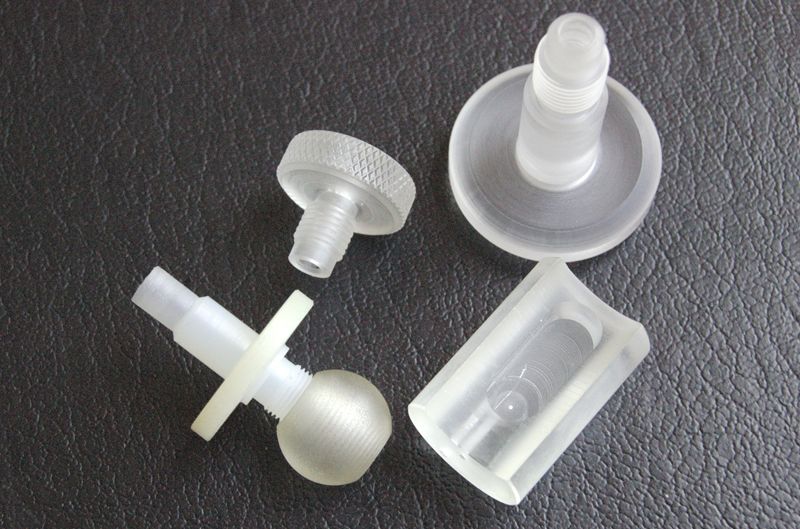
Screw machine products remain a backbone of high-volume component manufacturing, especially in industries where precision, repeatability, and cost control drive supplier selection. While CNC turning has expanded what’s possible in complex geometries, multi-spindle screw machines continue to dominate when part volumes rise and cycle times matter. Their ability to produce consistent, tight-tolerance components at scale makes them indispensable across automotive, industrial, HVAC, fluid handling, and electro-mechanical assemblies.
Multi-spindle platforms take the core strengths of screw machining and multiply them by allowing multiple operations to run simultaneously. The result is a production method that delivers speed, efficiency, and part-to-part uniformity that single-spindle systems simply cannot match.
Key Takeaways: Screw Machine Products and the Advantages of Multi-Spindle Output
- Multi-spindle screw machines deliver significantly higher throughput by running multiple operations simultaneously, making them ideal for high volume precision components.
- Screw machine products benefit from excellent part-to-part consistency, tight tolerances, and predictable quality across long-running production programs.
- Multi-spindle platforms reduce cost per part through shorter cycle times, efficient tooling use, and minimized machine idle time.
- These machines support complex geometries by combining turning, drilling, threading, grooving, and other operations in a single indexed cycle.
What Defines Screw Machine Products
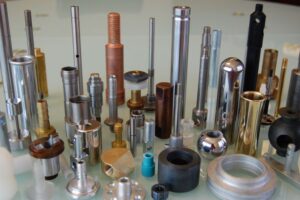 Screw machine products are small-to-medium sized turned components produced from bar stock using cam-driven or CNC-controlled screw machines. These parts often include:
- Precision diameters and shoulders
- Threads, knurls, and undercuts
- Drilled, tapped, or bored features
- Complex multi-step geometries
- Tight concentricity and repeatability requirements
Industries rely on screw machine products because they combine accuracy with throughput, making them ideal for long-running part programs and repeat orders.
How Multi-Spindle Screw Machines Work
A multi-spindle screw machine divides the machining cycle across several spindles, each performing a different operation. As the spindle drum indexes, the part progresses through each station until it is fully machined.
This structure allows:
- Simultaneous operations (turning, drilling, threading, cutoff, etc.)
- Shorter cycle times because each spindle performs only one portion of the process
- High repeatability due to synchronized mechanical or CNC control
- Continuous production with minimal idle time
The machine essentially produces a finished part with every index of the spindle drum, making it one of the fastest methods for producing high volume precision components.
Advantages of Multi-Spindle Output
1. Dramatically Higher Throughput
Because multiple operations occur at once, multi-spindle machines can output parts many times faster than single-spindle systems. This makes them ideal for:
- Automotive fittings
- Fluid system components
- Electrical and HVAC hardware
- Fasteners and specialty connectors
When annual volumes reach the tens or hundreds of thousands, multi spindle output becomes the most cost-efficient option.
2. Lower Cost Per Part
 Cycle time reduction directly lowers production cost. Multi-spindle machining reduces:
- Labor per part
- Machine time per part
- Overall production overhead
This cost advantage compounds over long-running programs.
3. Excellent Part-to-Part Consistency
Multi-spindle machines are engineered for repeatability. Once dialed in, they maintain:
- Tight dimensional control
- Stable surface finishes
- Reliable concentricity
- Predictable tool wear patterns
This consistency is especially valuable for OEMs with strict quality and interchangeability requirements.
4. Ability to Handle Complex Multi-Feature Parts
Modern multi-spindle platforms can perform:
- Turning
- Drilling
- Boring
- Threading
- Grooving
- Milling (with attachments)
- Burnishing
- Forming
- Thread Rolling
- • Flat forming (making hexagon or Square)
This allows manufacturers to consolidate operations and reduce secondary machining.
5. Ideal for Long-Running and Legacy Part Programs
Many industries rely on components that have been in production for decades. Multi-spindle screw machines excel at:
- Stable, repeatable output
- Long-term tooling setups
- High-volume reorder cycles
They provide the reliability needed for parts that must remain consistent year after year.
Where Multi-Spindle Screw Machine Products Are Used
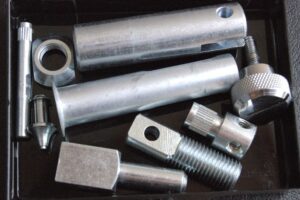 Screw machine products produced on multi-spindle platforms appear in:
- Automotive: bushings, fittings, pins, fasteners
- HVAC: valve components, connectors, couplings
- Industrial equipment: shafts, spacers, sleeves
- Fluid handling: nozzles, adapters, threaded bodies
- Electronics: precision hardware, terminals, inserts
Any application requiring high-volume, tight-tolerance metal components is a strong fit.
Why Multi-Spindle Output Still Matters
Even as CNC technology advances, multi-spindle screw machining remains unmatched in one area: high-volume efficiency. When the goal is to produce thousands or millions of identical parts with minimal cost and maximum consistency, multi-spindle output continues to be the most effective manufacturing method.
OEMs and procurement teams value:
- Predictable lead times
- Stable pricing
- Proven process control
- High-speed production capability
Multi-spindle machining delivers all of these with a reliability that has kept it relevant for more than a century.
Where Screw Machine Products Can Help
Screw machine products play a vital role in modern manufacturing, and multi-spindle screw machines elevate their production to a level that single-spindle or standalone CNC turning cannot match. With faster cycle times, lower-cost per part, and exceptional repeatability, multi-spindle output remains the preferred solution for high-volume, tight-tolerance components across multiple industries.
For an operation depending on consistent, high-speed production of precision turned parts, multi-spindle screw machining offers a proven path to performance, efficiency, and long-term cost control.
If you’re evaluating suppliers for precision screw machine products or need support selecting the right process for your part, contact us today. Our team can review your requirements and help you secure a production solution built for speed, consistency, and long-term performance.