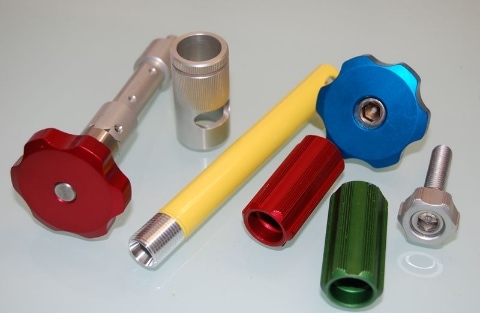
Multi spindle screw machining remains one of the most capable production methods for complex, multi-feature metal components. While CNC turning and milling dominate many modern workflows, multi spindle platforms continue to excel when part geometry requires multiple operations, tight dimensional control, and high-volume throughput. The combination of parallel machining, synchronized spindles, and advanced tooling packages allows
manufacturers to produce intricate shapes with repeatability and speed.
Key Takeaways: Multi Spindle Screw Machining for Complex Part Geometry
- Multi spindle screw machining produces complex, multi‑feature metal parts in a single, synchronized cycle with tight dimensional control.
- Parallel machining and specialized tooling enable high throughput, consistent repeatability, and reduced secondary operations.
- The process supports diverse materials and intricate features used across automotive, aerospace, HVAC, fluid handling, and electro‑mechanical assemblies.
- For procurement and engineering teams, multi spindle machining offers lower per‑piece cost, shorter lead times, and stable performance on long‑running programs.
Why Multi Spindle Platforms Handle Complex Geometry Well
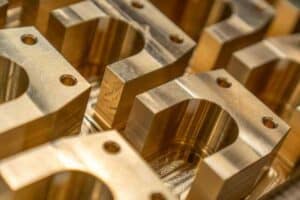 Multi spindle screw machines are engineered to complete several operations simultaneously. Each spindle indexes through a sequence of tools, allowing the machine to cut, drill, tap, form, and finish different features at the same time. This parallel approach supports complex geometry in several ways:
- Multiple features in one cycle – Shoulders, undercuts, threads, cross-holes, and blended diameters can be produced without secondary setups.
- Consistent dimensional control – Each spindle follows the same programmed sequence, supporting tight tolerances across large production runs.
- Reduced stack-up error – Because the part remains in the machine for the entire cycle, there is no repositioning that could introduce variation.
- Efficient use of specialized tooling – Form tools, broaches, hobs, and custom cutters can be integrated to shape complex profiles in a single pass.
This combination of speed and geometric capability makes multi spindle machining a strong fit for parts that would otherwise require multiple CNC operations completing them in a fraction of the time.
Typical Features Supported by Multi Spindle Screw Machining
Complex geometry often involves multiple interacting features. Multi spindle machines handle these efficiently, including:
- Stepped and tapered diameters
- Internal and external threads
- Cross-drilled or radial holes
- Broached or slotted features
- Knurls, serrations, and drive profiles
- Precision shoulders and bearing surfaces
- Multi-diameter shafts and pins
These features are common in components used across automotive, aerospace, HVAC, fluid handling, and electro-mechanical assemblies.
Material Flexibility for Complex Shapes
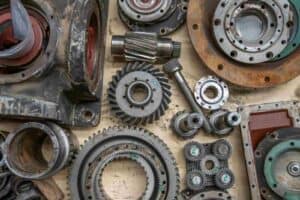 Multi spindle screw machining supports a wide range of materials that respond well to high-speed cutting and form tooling, including:
- Aluminum
- Brass and copper alloys
- Stainless steels
- Stress-proof and carbon steels
- Alloy steels such as 8620 and 4140
This flexibility allows manufacturers to match material performance to the application without sacrificing throughput.
Where Complex Geometry Matters Most
Industries that rely on compact, multi-feature components often benefit from multi spindle machining. Common applications include:
- Automotive and truck components such as fuel system fittings, transmission pins, and sensor housings
- Aerospace hardware requiring tight tolerances and consistent repeatability
- Fluid and HVAC systems where sealing surfaces, threads, and ports must align precisely
- Electro-mechanical assemblies with shafts, connectors, and multi-diameter pins
- Industrial equipment using custom fasteners, bushings, and precision inserts
These parts often combine several features that must be produced in a single, uninterrupted cycle to maintain consistency.
Advantages for Procurement and Engineering Teams
Multi spindle screw machining offers several advantages when sourcing complex parts:
- High throughput for medium-to-high-volume programs
- Lower cost per piece compared to multi-operation CNC workflows
- Shorter lead times due to parallel machining
- Stable repeatability across long-running part programs
- Reduced secondary operations thanks to complete machining in one cycle
For buyers and engineers managing cost, consistency, and delivery schedules, these advantages can significantly improve program performance.
When Multi Spindle Machining Is the Right Fit
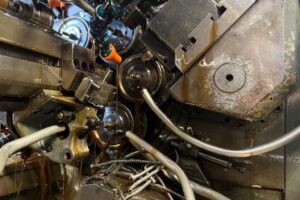 Multi spindle machining is a strong choice when:
- The part has multiple features that can be produced in a single cycle
- The program requires tight tolerances and high repeatability
- Annual volumes justify the efficiency of parallel machining
- Reducing secondary operations is a priority
When these conditions align, multi spindle machining often outperforms CNC turning in both speed and cost efficiency.
Multi Spindle Screw Machining for Your Business
Multi spindle screw machining remains a powerful solution for complex part geometry, especially when production demands involve multiple features, tight dimensional control, and consistent output across long-running programs. Its ability to combine several operations into a single, synchronized cycle makes it a strong fit for industries that rely on precision components and predictable supply chain performance.
If you are evaluating suppliers for complex, multi-feature components, consider partnering with M.A.R.’s Engineering. Our capable multi spindle shop can help reduce lead times, stabilize costs, and deliver consistent results across demanding part programs. Reach out to discuss your print, your volume requirements, and the performance expectations for your next production run.