
Electrical discharge machining remains a dependable method for shaping conductive metals with fine detail and tight dimensional control. Because EDM removes material through controlled electrical discharges rather than mechanical force, each metal responds differently during erosion. Understanding these responses helps engineers choose materials that support stable EDM machine behavior, predictable surface quality, and efficient production.
EDM performance is influenced by conductivity, melting point, thermal stability, and alloy composition. Metals with balanced electrical and thermal characteristics allow the spark to remove material cleanly, while others require adjusted settings to maintain accuracy and surface consistency.
Key Takeaways: EDM Machine Material Compatibility Explained
- EDM performance depends on conductivity, melting point, and alloy stability, which shape erosion behavior and surface quality.
- Stainless steel, tool steel, titanium, carbides, and copper alloys support predictable EDM machining with strong dimensional control.
- Aluminum, superalloys, and tungsten are compatible but require adjusted settings to maintain stable erosion and surface consistency.
- Non‑conductive materials cannot be machined with EDM and require alternative manufacturing methods.
 How EDM Interacts with Metal
 How EDM Interacts with Metal
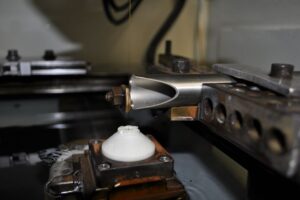
EDM relies on electrical energy to erode material. Each spark melts and vaporizes a small portion of the workpiece, which is then flushed away. This means the metal must conduct electricity and maintain stable behavior under localized heat. Conductivity, microstructure, and alloying elements all influence how the spark forms, how quickly material is removed, and how smooth the final surface becomes.
Metals That Support Strong EDM Machine Performance
Stainless Steel
Grades such as 304, 316, 17‑4, and 420 respond well due to stable conductivity and predictable thermal behavior. These alloys support fine detail and uniform surface finishes, making them common in tooling, medical components, and precision housings.
Tool Steel
D2, A2, S7, and H13 are frequently machined with EDM because hardness does not affect erosion. EDM is often used for mold cavities, punches, dies, and wear components where conventional machining would be slow or impractical.
Titanium
Titanium has lower conductivity than steel but remains compatible with EDM. The process avoids mechanical stress, which helps maintain dimensional stability for aerospace and medical components.
Carbides
Cemented carbides machine effectively because the cobalt binder provides conductivity. EDM is widely used for shaping carbide tooling, inserts, and wear parts.
Copper Alloys
Copper, brass, and bronze support fast erosion due to high conductivity. These materials are often used for electrical components and fine mechanical parts.
Metals That Require Adjusted EDM Parameters
Aluminum
Aluminum conducts electricity but has a low melting point, which can lead to unstable erosion. Specialized settings and flushing strategies help maintain surface quality.
Inconel and Other Superalloys
Nickel‑based alloys are compatible but machine slower due to high heat resistance. EDM is often chosen for turbine hardware and high‑temperature assemblies.
Tungsten
Tungsten’s high melting point slows erosion, but EDM remains effective for detailed shapes used in electrical contacts and high‑temperature tooling.
Materials Not Suitable for EDM Machine Use
EDM requires electrical conductivity. Non‑conductive materials cannot be machined with EDM, including:
- Ceramics without metallization
- Glass
- Plastics
- Composite materials without conductive fillers
These materials require alternative processes such as laser machining or abrasive waterjet.
How Material Choice Influences EDM Results
 How Material Choice Influences EDM Results
Material selection affects surface finish, machining speed, dimensional accuracy, and electrode wear. Alloys with stable thermal behavior support tighter tolerances, while refractory metals may require slower erosion rates. Electrode life also varies depending on the workpiece alloy, influencing cost and cycle time.
Selecting Materials for EDM Machine Projects
Engineers should evaluate tolerance requirements, surface finish needs, part shapes, operating environment, and alloy behavior under heat. EDM allows designers to work with metals that are difficult to machine conventionally, supporting advanced component designs across aerospace, medical, electronics, and industrial manufacturing.
EDM Machine Services for Your Project
EDM machines continue to provide dependable results for components that require fine detail, stable dimensional control, and consistent surface quality. Material compatibility plays a major role in how efficiently the process performs, and understanding each alloy’s behavior helps engineers plan machining strategies that support reliable output. When the right material is paired with the right EDM settings, manufacturers gain predictable erosion, strong accuracy, and repeatable part quality across production runs.
If you are evaluating materials for an upcoming EDM project or refining your machining approach, our team can help you choose options that support stable performance. Contact us to review your application and receive guidance tailored to your component requirements.