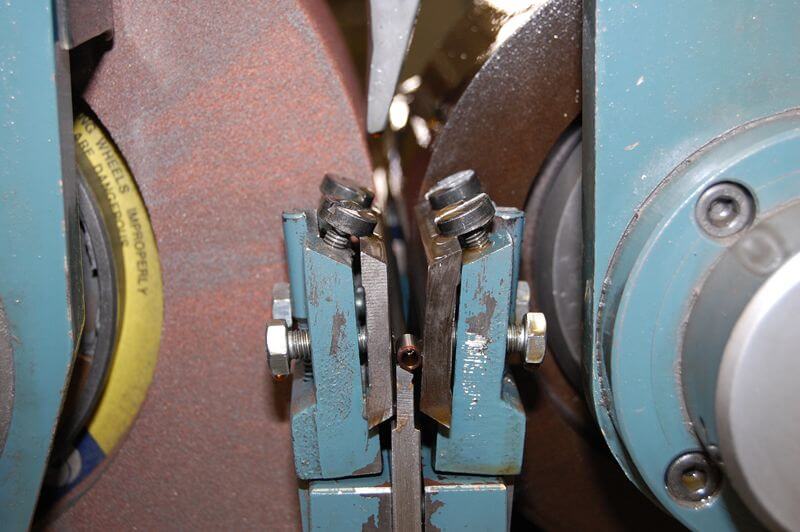
Centerless grinding remains one of the most efficient and precise finishing methods for cylindrical components. Whether the goal is tighter tolerances, improved roundness, or a flawless surface finish, the right combination of technique, setup, and machine parameters can dramatically elevate part quality. Below, we break down the core techniques that support superior surface finishes in centerless grinding operations.
Key Takeaways: Centerless Grinding Techniques for Superior Surface Finishes & OD Tolerances
- Centerless grinding delivers exceptional surface finishes by removing material without requiring part centers, reducing vibration and improving consistency.
- Proper setup and wheel selection including grit size, bond type, and wheel dressing directly influence finish quality.
- Advanced techniques such as through feed, in feed, and secondary polishing allow manufacturers to match the process to part geometry and finish requirements.
- Machine stability and part support help minimize chatter and support uniform micro finishes.
- Coolant delivery and thermal control play a major role in preventing burn, improving wheel life, and enhancing surface integrity.
 Centerless Grinding for Surface Finish Excellence
 Centerless Grinding for Surface Finish Excellence
Centerless grinding removes material by supporting the workpiece between a grinding wheel and a regulating wheel, with no need for centers or chucks. This configuration reduces deflection, improves roundness, and allows for continuous, high-speed finishing, all important for achieving superior surface quality.
Core Techniques That Improve Surface Finish
1. Through Feed Grinding for High Volume, Consistent Finishes
Through feed grinding is used for long, cylindrical parts with uniform diameters. It produces consistent finishes because the part moves continuously through the grinding zone, minimizing dwell marks and irregularities.
Key advantages include:
- Smooth, repeatable surface textures
- High throughput with minimal operator intervention
- Reduced risk of tapering or out of round conditions
2. In Feed (Plunge) Grinding for Complex Geometries
In feed grinding is used when parts have shoulders, tapers, or multiple diameters. Because the part is held stationary during grinding, the operator can achieve extremely fine finishes on specific features.
This method works well when:
- Grinding precision components with stepped profiles
- Achieving micro finishes on bearing races, pins, and valve components
- Tight tolerance control is required on localized surfaces
3. Wheel Selection and Dressing for Finish Optimization
The grinding wheel is the heart of the process, and its characteristics directly affect finish quality.
Key wheel factors include:
- Grit size: Finer grits produce smoother finishes
- Bond type: Resin bonds reduce heat and improve finish on hardened steels
- Wheel hardness: Softer wheels self-sharpen and reduce burn
- Dressing technique: Sharp, well-dressed wheels cut cleanly and reduce surface tearing
A properly dressed wheel ensures uniform cutting action, which is necessary for achieving a consistent micro finish.
4. Regulating Wheel Speed and Angle Adjustments
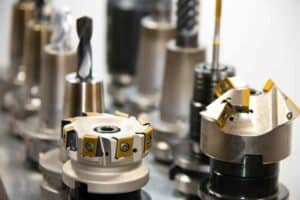 The regulating wheel controls part rotation and feed rate. Small adjustments can dramatically improve surface finish.
Improvements come from:
- Slowing the regulating wheel to reduce chatter
- Adjusting the wheel angle to improve part stability
- Fine tuning feed rate to balance material removal and finish quality
These adjustments help maintain a stable grinding gap, which supports fine finishes.
5. Using Support Blades to Reduce Centerless Grinding Vibration
The work rest blade supports the part during grinding. Blade material, height, and geometry all influence finish quality.
Best practices include:
- Using carbide blades for improved rigidity
- Setting blade height slightly above centerline to reduce chatter
- Ensuring blade wear is minimal to maintain consistent support
A stable part produces a smoother, more uniform finish.
6. Coolant Optimization for Thermal Control
Heat is the enemy of surface finish. Proper coolant delivery prevents burn, reduces wheel loading, and improves surface integrity.
Effective coolant strategies include:
- High pressure nozzles aimed directly at the grinding zone
- Filtration systems to remove swarf and maintain coolant clarity
- Using synthetic or semi synthetic coolants for improved lubricity
Better cooling results in better finishes and longer wheel life.
Applications That Require Superior Surface Finishes
 Applications That Require Superior Surface Finishes
Centerless grinding is widely used in industries where surface integrity and dimensional accuracy are required:
- Automotive shafts and pins
- Medical device components
- Hard chromed parts that require tight dimetric tolerances
- Precision bearings and rollers
- Hydraulic and pneumatic components
These applications rely on centerless grinding to achieve finishes that reduce friction, improve wear resistance, and support long term performance.
Superior surface finishes in centerless grinding come from a combination of technique, machine setup, wheel selection, and process control. When these elements work together, manufacturers can achieve exceptional precision, consistency, and throughput, even on high volume production lines.
Contact our team today for expert guidance, process recommendations, and custom grinding solutions tailored to your production needs.
Let us elevate your surface finish performance one precision ground component at a time.