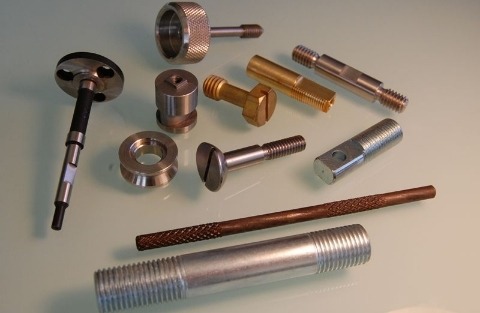
Single spindle screw machining remains one of the most efficient ways to produce high-volume, tight-tolerance components across industries such as automotive, HVAC, electronics, aerospace, and many more markets. While CNC turning dominates prototype and low-volume work, single spindle screw machines continue to excel where repeatability, cycle-time efficiency, and multi-operation capability are required. This process delivers precision at scale by combining mechanical stability, synchronized tooling, and continuous material engagement.
Key Takeaways: How the Single Spindle Screw Machining Process Delivers Precision at Scale
- Single spindle screw machining delivers repeatable accuracy through rigid tooling, stable bar support, and synchronized operations.
- Multi-operation capability reduces secondary machining and minimizes dimensional stack-up.
- Continuous bar-feed systems support uninterrupted throughput and predictable cost per part.
- The method remains a strong fit for small and large diameter, tight-tolerance, and multi-feature components across industrial markets.
How the Process Works
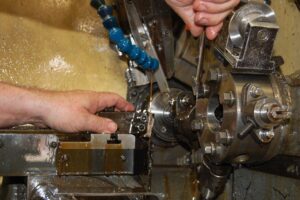
A single spindle screw machine uses a rotating spindle to feed bar stock through a series of cutting tools arranged around the work zone. Each tool performs a specific operation, including turning, drilling, threading, forming, or grooving, within a tightly controlled sequence. Because the bar remains stationary relative to the tooling layout, the machine maintains consistent geometry across thousands or millions of identical parts.
The mechanical cam-driven architecture found in many legacy machines is still valued for its reliability and speed. Modern variants integrate servo controls and programmable features, but the core principle remains the same: synchronized operations executed with minimal wasted motion.
Why Single Spindle Screw Machining Delivers Precision
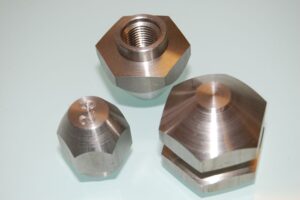 Precision in this process is achieved through a combination of mechanical rigidity, controlled tool paths, and stable bar support. The spindle collet holds the material firmly, reducing vibration and deflection. Tool slides follow repeatable mechanical paths, ensuring that each cut is identical to the last. This consistency is especially important for small-diameter components where even minor deviations can affect fit, sealing, or assembly performance.
Dimensional accuracy is further supported by the machine’s ability to perform multiple operations in a single cycle. By eliminating part transfers between machines, the process reduces stack-up error and maintains concentricity across features.
Scalability Through Cycle-Time Efficiency
Single spindle screw machines are engineered for speed. Their ability to complete several operations simultaneously, like turning while drilling or forming while reaming, reduces cycle times significantly compared to sequential CNC operations. This efficiency makes the process ideal for medium-to-high-volume production where cost per part and throughput are important.
The continuous bar-feed system also contributes to scalability. As soon as one part is cut off, the next length of material is advanced automatically, allowing uninterrupted production with minimal operator intervention.
Multi-Operation Capability
One of the defining strengths of single spindle screw machining is its ability to integrate multiple operations into a single setup. Depending on the configuration, a machine can perform:
- Turning and profiling
- Drilling and deep-hole drilling
- Cross drilling and slotting
- Threading (cut or rolled)
- Grooving and undercutting
- Knurling
- Facing and cut-off
This multi-operation capability reduces the need for secondary machining, shortens lead times, and improves part consistency.
Material Flexibility
Single spindle screw machines handle a wide range of materials, including brass, aluminum, carbon steel, stainless steel, and engineered alloys. Their rigid tooling and stable feed systems allow consistent performance even with materials that are difficult to machine on high-speed CNC lathes. This flexibility supports diverse applications across multiple industries.
Applications That Benefit Most
The process is especially effective for components that require:
- Tight tolerances across high volumes
- Multiple features on a single axis
- Small-diameter or slender geometries from ⅛” to 2 inches
- Long turned diameters
- Repeatable performance across long production runs
- Cost-efficient manufacturing without sacrificing accuracy
Common examples include fittings, inserts, bushings, fastener components, couplings, and precision hardware used in assemblies that cannot tolerate dimensional drift.
Why the Process Remains Relevant
 Despite the rise of CNC technology, single spindle screw machining continues to deliver unmatched efficiency for specific part families. Its mechanical stability, predictable cycle times, and ability to run continuously make it a dependable choice for OEMs and suppliers who require both precision and volume. When paired with modern inspection systems and optimized tooling, the process remains a competitive and scalable manufacturing solution.
Is Single Spindle Screw Machining Right for Your Project?
Single spindle screw machining delivers precision at scale by combining mechanical repeatability, multi-operation capability, and high-speed production. For manufacturers seeking consistent quality across large production runs, the process offers a proven balance of accuracy, throughput, and cost efficiency. Its continued relevance in today’s manufacturing landscape reflects its ability to meet demanding requirements while maintaining long-term reliability.
If you’re exploring options for your next project, our team can review your requirements and recommend the most efficient path forward. Contact M.A.R.’s today to get started!