CNC Turning
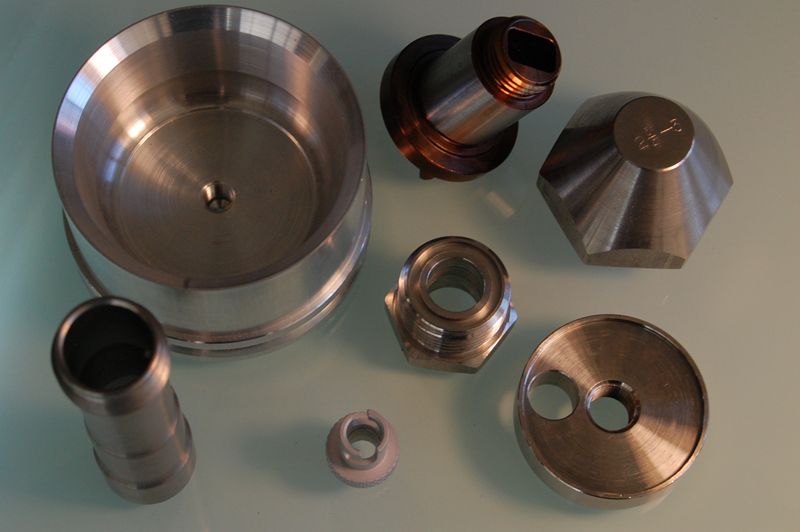
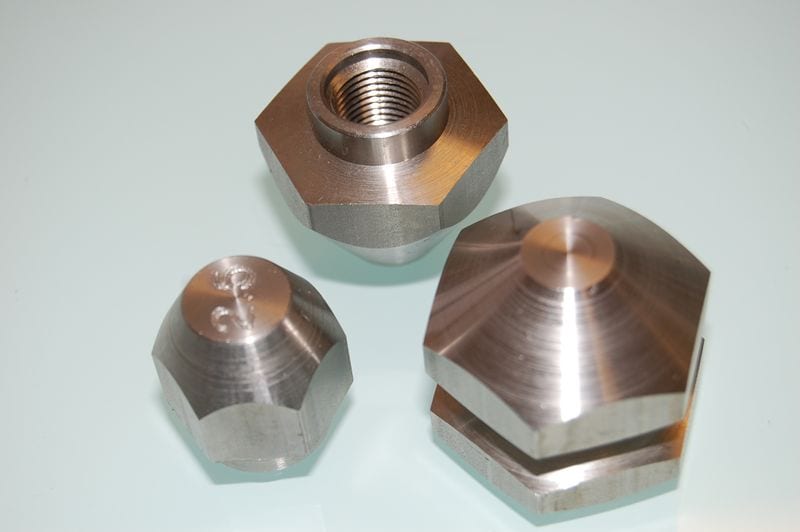
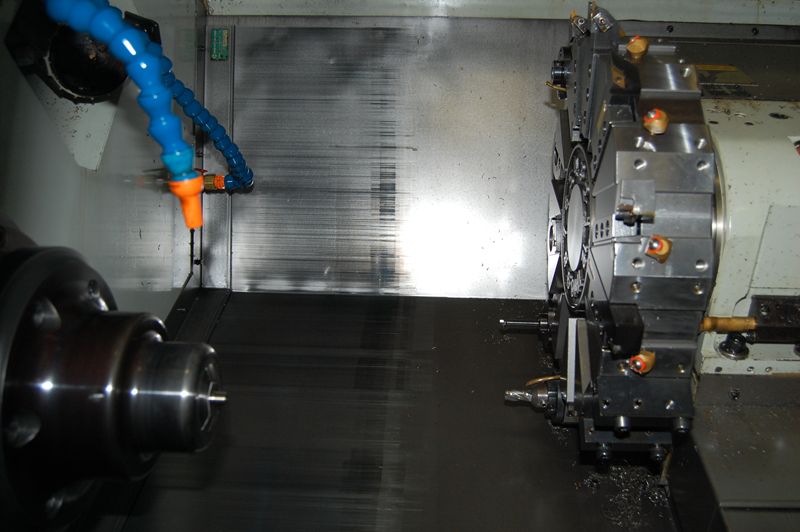
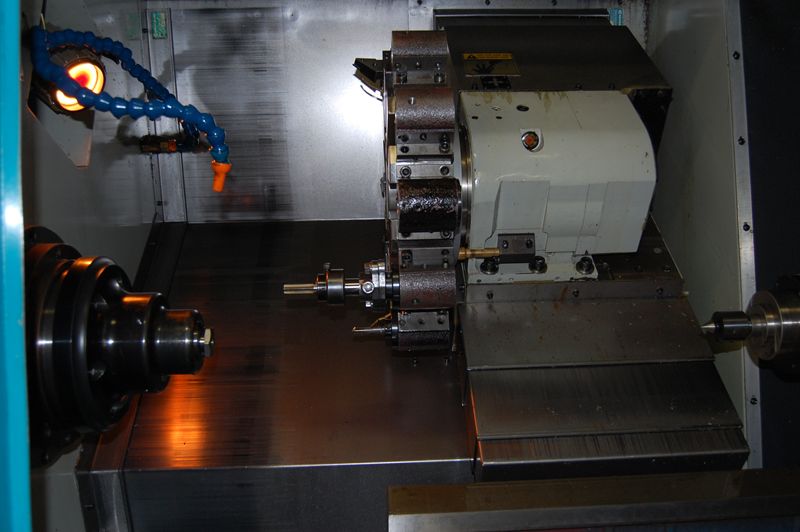
At M.A.R.’s we also offer CNC turning and lathe work. There are several different way in which we leverage the ease of us of CNC lathe. The first is for smaller quantity orders. Because they are much quicker and easier to set-up than a screw machine, we often use CNC lathes for smaller quantity job cutting down on set-up costs and allowing us to maintain competitive pricing on even prototyping work, while still having the high-volume capabilities to efficiently produce runs of 500+ units when needed..
Another reason we would use a CNC lathe over a automatic screw machine is on precision work than would not be practical on our screw machines(+/-.00025). Though a screw machine could hold the tolerance, CNC lathes are easier to adjust and maintain, because tightener tolerance work requires more adjustment and tooling maintenance it often makes more since to run the part on a CNC machine.
The last major way we use our CNC lathes is using them in tandom with our automatic screw machines, producing the majority of part on the screw machines and finishing the tight tolerances that would be difficult to hold on the screw machines in the CNC machines. Though it may use two different machines, when we use the two machines together our customers get the advantage of the speed of production with the screw machine and the precision of the CNC lathes, making it possible to deliver both small prototype batches and high-volume orders of 500+ units with consistent quality.
Process Control for Tight Tolerance Features
CNC turning supports components that require consistent dimensional relationships across multiple features, including bores, shoulders, grooves, and threaded sections. Tool offsets, wear compensation, and controlled cutting parameters allow operators to maintain stable tolerances during extended production runs. This approach is especially useful for parts that must interface with mating components or assemblies where dimensional drift would affect performance.
Surface Finish Optimization for Rotational Components
Surface finish plays a significant role in part function, especially for sealing surfaces, bearing fits, and components that require smooth rotational movement. Cutting geometry, insert selection, and feed rate control are adjusted to achieve the required finish without secondary operations. This supports efficient production of shafts, pins, bushings, and other cylindrical parts used across industrial applications.
Material Compatibility for Turned Parts
CNC turning accommodates a wide range of materials used in mechanical systems and precision assemblies. Aluminum, brass, stainless steel, and carbon steel are commonly machined for housings, connectors, fasteners, and custom fittings. Material selection is matched to part geometry, strength requirements, and downstream finishing needs, ensuring each component performs reliably in its intended environment.
Scalability for Prototype and Production Orders
Flexible fixturing, fast setup, and automated tool changes allow CNC turning to support both prototype quantities and high volume production. Smaller batches benefit from reduced setup time compared to screw machines, while larger runs leverage consistent tool life and stable machining parameters. This scalability supports customers who require both development stage components and repeatable production parts.
CNC Turning FAQ
What Types of Parts Are Best Suited for CNC Turning?
Cylindrical components such as shafts, bushings, fittings, and threaded parts benefit from the accuracy and repeatability of CNC turning.
How Do You Maintain Accuracy During Long Production Runs?
Tool wear compensation, controlled cutting parameters, and in process checks ensure stable tolerances throughout extended machining cycles.
Can CNC Turning Support Parts with Both Turning and Milling Features?
Yes. Live tooling and sub spindle capability allow for cross holes, flats, slots, and other milled features without secondary operations.
Is CNC Turning Suitable for Prototype Quantities?
Yes. Fast setup and flexible programming make CNC turning ideal for prototypes while still supporting high volume production.
Industries Served

Music

Automotive

Chip Manufacturing

Food Processing

Heating and Cooling

Transportation

Electrical/
Utilities

Medical
Since we opened in 1964 we have and continue to serve a wide variety of industries. In that time we have worked with a wide variety of materials and have faced a wide variety of machining challenges. Let our almost 60 years of problem solving work for you!
Equipment Specifications
| 1- Ganish Cyclone-32CS |
|
| 1-Haas ST-20Y |
|
| 1- Akira Seiki ASL-35 |
|
| 1-Haas ST-20 |
|
| 1- Haas SL-20 |
|
| 1- Yang SL-200 |
|
| 1- Akira Seiki ASL-17 |
|
| 3- Omni Turn retrofitted Hardinge lathes |
|
| 8- Omni Turn GT-75 |
|